With the introduction of USB-C Power Delivery 3.1, charging technology has entered a new era. Devices can now support up to 240W through Extended Power Range (EPR). But this raises an important question: do you need a USB-C EPR cable to use these higher power levels?
In this complete 2026 guide, we explain what a USB-C EPR cable is, how it differs from standard USB-C cables, and whether upgrading is necessary for your laptop or high-watt charger.
What Is a USB-C EPR Cable?
A USB-C EPR cable is a certified USB-C cable designed to support Extended Power Range under the USB Power Delivery 3.1 specification.
Unlike older Standard Power Range (SPR) cables limited to 100W, EPR cables can safely handle up to:
- 28V (140W)
- 36V (180W)
- 48V (240W)
EPR cables include special internal markers and updated insulation to safely carry higher voltage levels.
For technical reference:
USB Power Delivery Overview
USB-C EPR vs Standard USB-C Cables
| Feature | Standard (SPR) | EPR Cable |
|---|---|---|
| Max Power | 100W | Up to 240W |
| Voltage Limit | 20V | 48V |
| PD Version | PD 3.0 | PD 3.1 |
| Required for 140W+ | No | Yes |
When Do You Actually Need a USB-C EPR Cable?
For Smartphones
Most smartphones charge below 65W. A standard 100W cable is sufficient.
For Ultrabooks
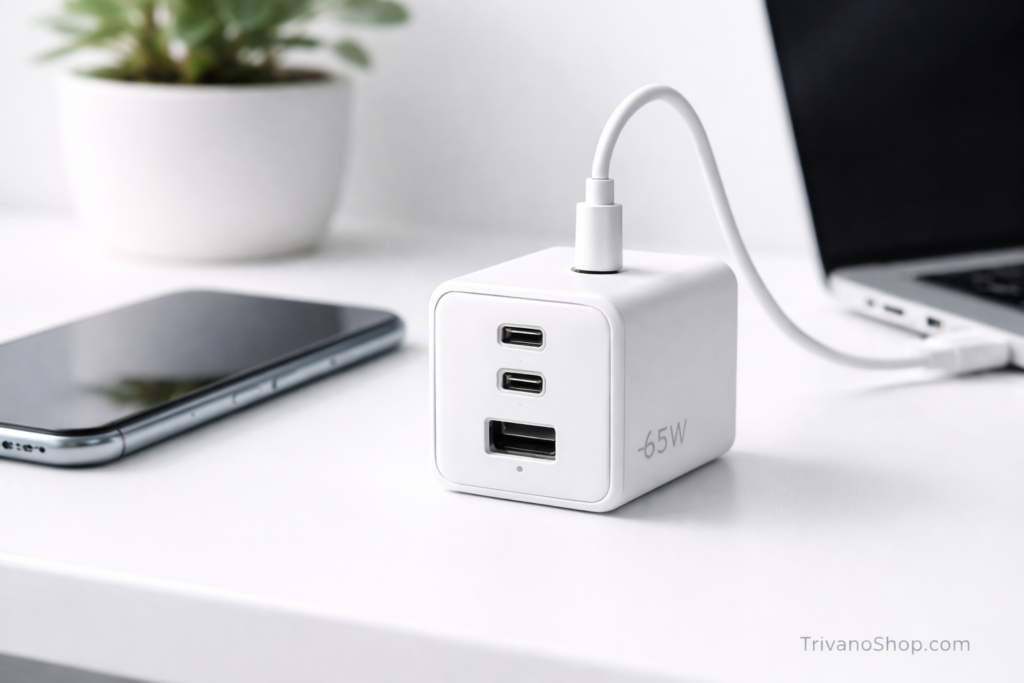
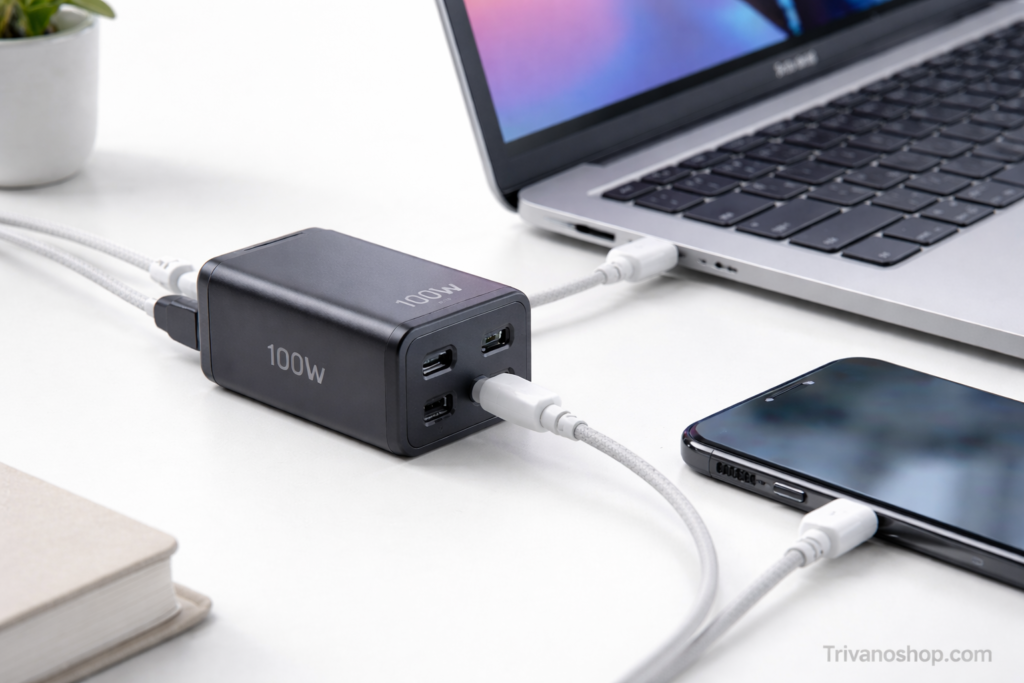
If your laptop charges at 65W or 100W, you do not need an EPR cable.
For 140W MacBooks or Gaming Laptops
Here, a USB-C EPR cable is required to safely deliver power above 100W.
How EPR Improves Safety
EPR cables use:
- Improved shielding
- Updated e-marker chips
- Higher insulation standards
- Enhanced voltage negotiation
This ensures safe power delivery even at 240W.
Common Myths About 240W USB-C Cables
“All USB-C cables support 240W”
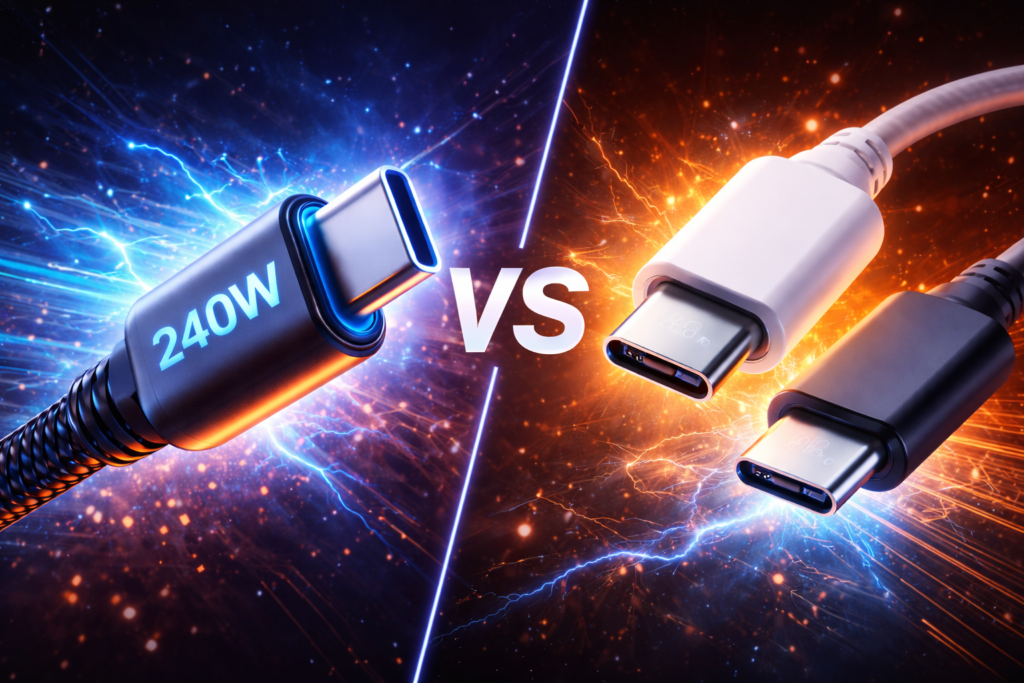
No. Only certified EPR cables support 240W charging.
“Using a 240W cable makes charging faster”
No. Speed depends on charger and device support, not just cable rating.
“EPR cables damage low-power devices”
No. USB-C negotiation ensures devices draw only what they need.
Compatibility with PD 3.1 Chargers
If you’re using a 140W or 240W charger, you must pair it with:
- PD 3.1 compatible charger
- USB-C EPR cable
- Device supporting high-watt charging
Learn more here:
PD 3.1 vs Intel GaN Explained
Are USB-C EPR Cables Future-Proof?
Yes. As laptops continue moving toward USB-C charging, EPR cables ensure long-term compatibility with higher wattage standards.
Investing in a USB-C EPR cable today means your setup will support next-generation devices.
Frequently Asked Questions (FAQ)
Do I need a USB-C EPR cable for 140W charging?
Yes. Charging above 100W requires an EPR-certified cable.
Can I use a 240W cable with a 65W charger?
Yes. The cable will safely operate at lower wattage.
How can I identify an EPR cable?
Look for “240W” labeling or official USB-IF certification.
Are EPR cables thicker?
In many cases yes, due to higher insulation requirements.
USB Power Delivery (PD) – Technical OverviewFinal Verdict
A USB-C EPR cable is essential only if your device charges above 100W. For most phones and standard laptops, a high-quality 100W cable is enough. However, if you own a 140W laptop or plan to future-proof your setup, upgrading to an EPR cable is a smart choice in 2026.